Why Your CRM Isn’t Broken—Your Habits Are
Most business owners know this scene. It’s late, you finally settle down, open your laptop, and tell yourself you will “just check a few things.” Then the CRM loads and reality hits. There are new leads you meant to follow up with, a pipeline with half-updated deals, tags you don’t remember creating, and automations you are hesitant to touch. You click around, feel the guilt rise, close the tab, and promise you’ll get to it tomorrow.
But tomorrow fills up fast. Calls come in, clients need attention, your team asks questions, and a week slips by. You revisit the CRM, see the same chaos, and it’s tempting to blame the platform.
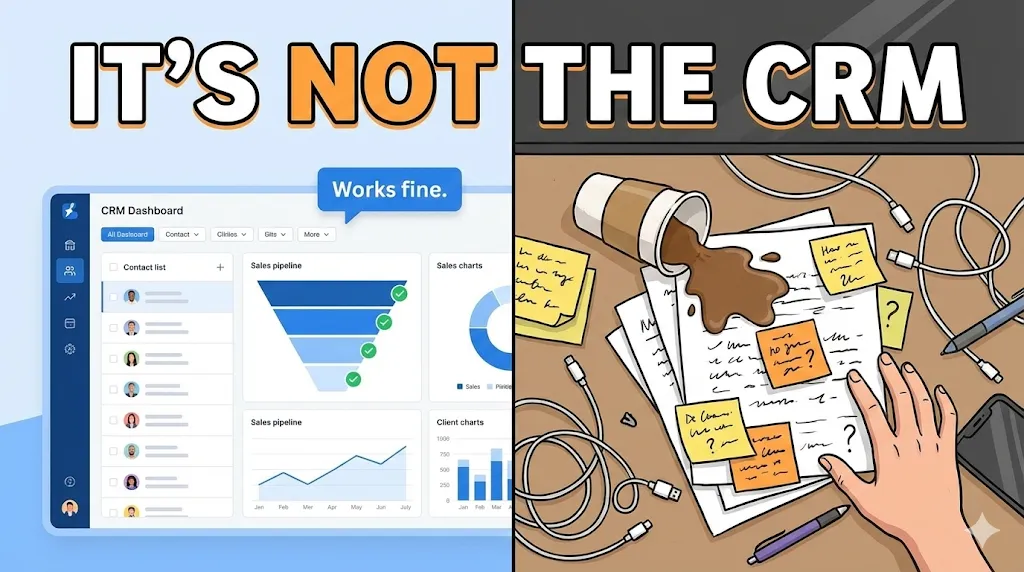
The truth is usually simpler. The CRM isn’t broken. The habits wrapped around it are.
The Tool Isn’t the Fix, You Are
Almost every owner I talk to has cycled through multiple CRMs. The first one felt promising. The second one seemed like an upgrade. The third one came highly recommended by YouTube experts. Each time, the pattern repeats. There is a rush of optimism, a few late nights trying to learn the system, maybe a small win or two, and then real life interrupts. The CRM becomes another subscription, another reminder of what you “should” be doing, another thing you avoid opening.
That leads to the conclusion that the software must be the issue. Too complex. Not built for your business. Lacking the features you need. But in most cases, the software isn’t the bottleneck. The missing piece is the set of habits and processes required to make the CRM useful.
CRMs Assume Systems, Most Businesses Rely on Heroics
CRMs are built for structured environments. They assume leads flow in, get logged, move through stages, and receive consistent follow-up. They expect notes, updates, and predictable workflows.
Most local and service-based businesses don’t operate in that world. You’re answering calls between jobs. You follow up when you can. Leads sit in your inbox, your messages, your voicemail, or a note on your truck’s dashboard. If someone asks how many leads came in last month, you have to dig through scattered information to figure it out.
Dropping a CRM into that world doesn’t create order. It exposes the lack of it.
The Real Breakdown: Process, Rhythm, and Accountability
When someone says their CRM “doesn’t work,” it usually comes down to one of a few issues.
No Single Source of Truth
Leads live in too many places. Email, texts, messages, spreadsheets, and memory all compete with the CRM. If the CRM isn’t the central home for leads, it will never feel accurate or trustworthy.
Follow-Up Happens Only When There’s Time
And in a busy service business, that’s almost never. Follow-up competes with everything else you do. Without a protected rhythm, leads slip away.
Reliance on Memory
Telling yourself you’ll call someone back or send a proposal later is not a system. Memory fails under pressure. If your follow-up relies on remembering, you’re gambling with revenue.
No Daily Ritual
Most owners only open their CRM when something goes wrong or when guilt hits. Without a simple daily routine, the tool never becomes part of how you operate.
One-Time Automation
Maybe you set up automations once. Maybe someone did it for you. Over time, you forgot how it all works and now you’re afraid to touch it. Technical debt grows, and you end up doing everything manually anyway.
None of this means you’re failing. It means you introduced a systems tool without changing the behaviors that make a system run.
Make the CRM Work for You, Not the Other Way Around
The question isn’t why you don’t use your CRM more. It’s what needs to be true for the CRM to become the easiest way to do the work you’re already trying to keep up with.
You’re already tracking follow-up in your head. You’re already searching for messages, wondering who’s serious, and trying to remember conversations. The CRM should simplify those tasks, not add stress to them.
You don’t need to master software. You need a small habit stack.
The Three Habits That Make Any CRM Work
Success doesn’t require fifty changes. You only need three.
One Inbox for All New Leads
Every new lead must land in the CRM. Form fills, calls, missed calls, emails, and messages all get logged. When your brain recognizes the CRM as the single source of truth, chaos starts to fade.
A Daily 15-Minute Follow-Up Block
Protect a short window each day. No interruptions. During that time, check new and in-progress leads and take the next steps. You don't have to fix everything at once. You’re simply maintaining forward motion.
A Weekly 20-Minute Review
Once a week, look at your pipeline. See where leads stall, where follow-up gaps exist, and where automations could help. You don’t need deep analytics. You just need awareness.
With these habits, the CRM becomes less of a container and more of a dashboard for revenue opportunities.
“I’m Already Busy, How Do I Change This?”
This is the most common concern. Owners are already stretched thin. But that’s exactly why small systems matter more than big overhauls. You don’t need a weekend locked in a conference room or a deep dive into every feature. You need a tool that supports your workflow, simple processes that fit your reality, and accountability so you stay consistent long enough to see results.
Most people don’t struggle because they lack skill. They struggle because they’re trying to do everything alone on top of running the business.
Think of It Like a Personal Trainer for Follow-Up
Buying a CRM is like joining a gym. You get access, equipment, and the chance to improve. But none of it works without guidance, structure, and consistent reps. Follow-up is the same. Most CRMs “fail” because nobody helped you design your workflow, walk through implementation, or establish habits that stick. When you work with a provider that
Once you have real support, the CRM shifts from overwhelming to empowering. You trust it. You stop worrying about lost leads. You follow up faster. You convert more of what you already have. And you stop chasing new tools as a distraction from the real work.
So Is Your CRM Broken?
Probably not. It may not be perfect, but the bigger issue is that nobody helped you build the habits and processes that make it pay off. You can start today by choosing one place for leads, protecting a short daily follow-up window, reviewing your pipeline weekly, and resisting the urge to jump to another platform before you’ve given your current one a fair chance.
If you’re realizing you don’t need another tool, you need someone to help you build the system and hold you to it, that’s your signal. Your CRM isn’t the problem. Your desire to improve is real. You’re just one set of habits and the right support away from the follow-up machine you thought you were buying in the first place.


